
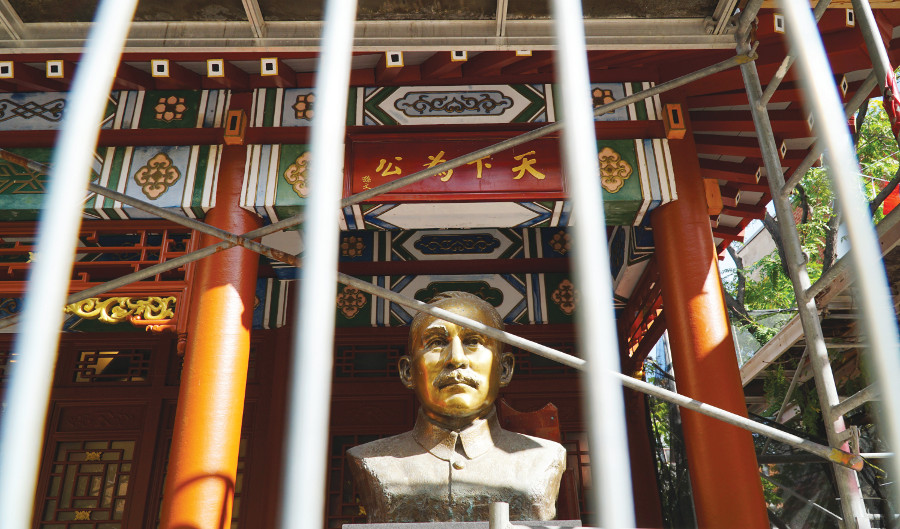



At first glance, Chinatown seems an innocuous space to experience and explore Chinese culture. Rather, I see Chinatown as spaces cultivated by the external discourse in which Chinatown only figures as an object. Chinatown has never projected or promoted a Chineseness that reflects me as a person from Northern China. In Chinese history, a central binary is the northerner-southerner divide, a cultural rift that has fueled various historical dreams of reunification from Han dynasty to the founding of People’s Republic of China.
Chinatowns were initiated solely by immigrants from the Pearl River Delta in the southern Guangdong province in the early 19th century. Until the mid-20th century, southerners comprised the overwhelming majority of Chinese emigrants—only recently have northern Chinese emigrated in any substantial number.
For me, Chinatown, as a distinctly Cantonese space, has always embodied the myth of a unified Chinese culture. If Chinatown refers to Chinese people, I read ‘Chinese’ as a hollow term, perhaps better relegated as an indication of othering for both Chinese people and Westerners, than as a word signifying a mix of nuanced regional identities.